
Discover the DRC
Portrait of the Democratic Republic of Congo
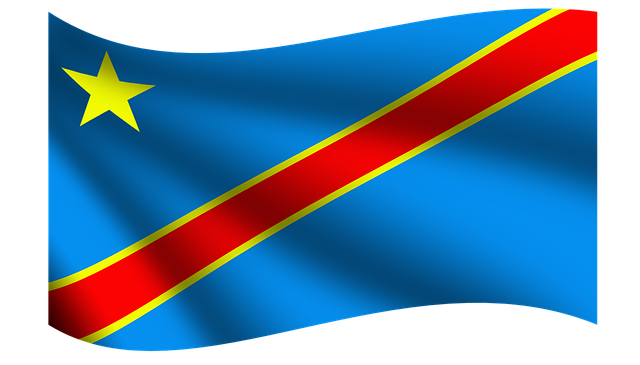
DRC flag
Emblem of the DRC
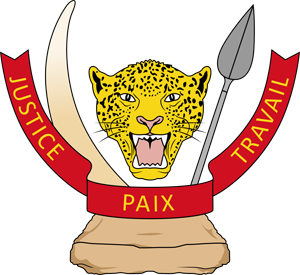
Motto
Justice, Paix, Travail
Anthem
Stand up Congolese
National Day
30 June, Belgian from Independence
Form of State
Semi-presidential republic
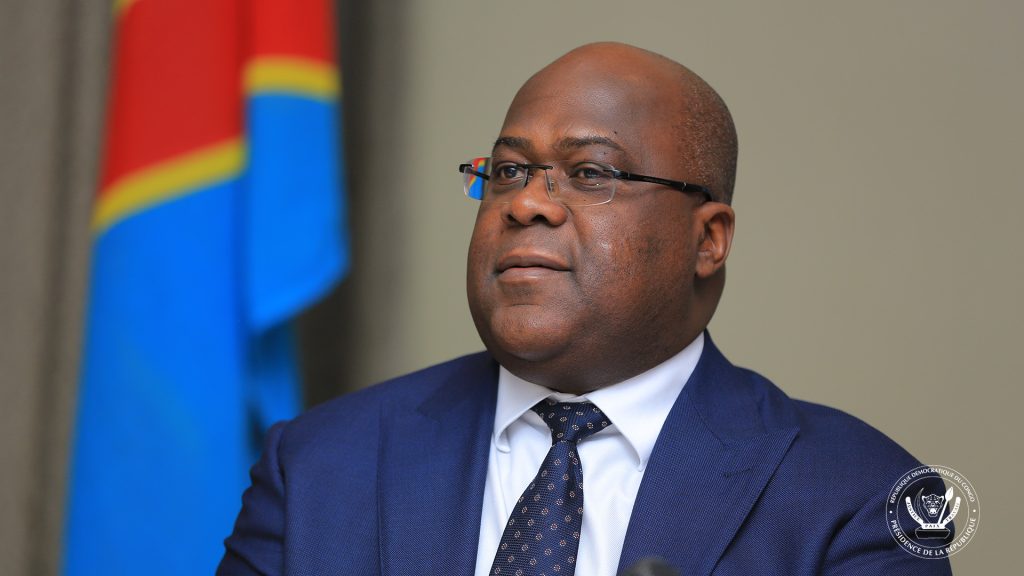
President of the Republic
H.E Felix Antoine Tshisekedi Tshilombo
Prime Minister
Jean-Michel Sama Lukonde Kyenge
President of the Senate
Modeste Bahati Lukwebo
President of the National Assembly
Christophe Mboso N’kodia Pwanga
Official language
French
National languages
Lingala, kikongo, swahili et tshiluba
Capital
Kinshasa
Area
2 345 860 Km²
Water surface
3,3 %
Time zone
UTC +1 et +2
Population
111 859 928 residents
Density
48 residents/Km²
Nominal gdp (2021)
55,35 billions of dollars
Currency
Congolese franc(CDF)
Introducing the Democratic Republic of Congo
The Democratic Republic of Congo is a country in Central Africa, also known as Congo Kinshasa or DRC. It is the most populous French-speaking state and the third most populous nation in Africa.
After Algeria, the DRC is the largest country in Africa. It covers most of the Congo River basin, which stretches from the Atlantic Ocean to the eastern plateau. One of the world’s largest rainforests lies to the north of the country, while the huge East African Rift, lined with mountains, hills, huge lakes and volcanoes, lies to the east.
The south and centre of the country, with their wooded savannahs, form a high plateau with a mineral-rich surface. A beach on the Atlantic Ocean lies to the far west, some thirty kilometres north of the mouth of the River Congo. The Angolan enclave of Cabinda borders the country to the west-south-west, the Republic of Congo to the west, the Central African Republic to the north, South Sudan to the north-east, Uganda to the east-north-east, Rwanda and Burundi to the east, Tanzania to the east-south-east, Zambia to the south-south-east and Angola to the south-west.
Félix Tshisekedi, the country’s current president, succeeded Joseph Kabila in the first peaceful transfer of power since independence in 2018.
The population is made up of several hundred different ethnic groups. French is the official language, while Kikongo and Lingala are two of the four Bantu languages with national language status. Agriculture and mining are the two main industries supporting the economy.
Lost of the Congo River basin is located in the Democratic Republic of Congo, in Central Africa. The country is semi-enclosed, with an arm of the sea to the west (Kongo Central) and a 39km strip of land wedged between the enclave of Cabinda to the north and Angola to the south. It covers an area of 2,345,410 km2, roughly two-thirds the size of the European Union or four times the size of France.
Geography of the DRC
Most of the Congo River basin is located in the Democratic Republic of Congo, in Central Africa. The country is semi-enclosed, with an arm of the sea to the west (Kongo Central) and a 39km strip of land wedged between the enclave of Cabinda to the north and Angola to the south. It covers an area of 2,345,410 km2, roughly two-thirds the size of the European Union or four times the size of France.
The DRC is divided into three main geographical zones.
One-third of the country is covered by the central basin, which has the lowest relief, alternates between swampy areas and tropical forests, and receives water from the Congo River and its tributaries throughout the year.
The savannah covers the plateaux surrounding the basin.
The mountain ranges of the provinces of North and South Kivu to the east.
Relief
The relief varies from the lowest point in the country (the coastal region of Moanda) to the mountains in the east, including the Ruwenzori, which rises to 5,109 metres (Pic Margueritte, Monts Mitumba, Virunga, etc.), and the high plateau of Katanga, where the average altitude exceeds 1,200 metres. The North Kivu region is also home to a number of volcanoes, including the constantly active Nyiragongo.
Hydrology
The Congo River is 4,700 km long, has a flow rate of 50,000 m3/s and a catchment area of 3.80 million km2. It rises in Katanga, where it is known as the Lualaba, at an altitude of 1,435 metres. Due to its location at the equator and the almost equal distribution of its tributaries in both hemispheres, which regulates its flow and makes it the most regular river in the world, it is the second longest river in Africa after the Nile, the largest in terms of flow and the second largest river in the world after the Amazon.
The river has significant economic value as a fishery, source of hydroelectricity and communication route. With its many tributaries, it forms a veritable river highway, with 14,166 km of navigable waterways. The Congo River crosses the country from end to end before emptying into the Atlantic Ocean via a large estuary, where its force is so great that its sandy waters can be seen more than 45 kilometres from the shore. With Mai-Ndombe and Ntumba to the west and Lakes Edouard, Albert, Kivu, Tanganyka, Moero, etc. to the east, the Congo River is also home to a number of important lakes.
The climate
The Democratic Republic of Congo has two distinct climates:
Tropical, hot all year round, with a dry season and a rainy season in the regions to the north and south of the equator, the duration of which varies from region to region. Equatorial, hot and humid all year round, in the central zone crossed by the equator, where the immense tropical rainforest is found.
The flora
The physical geography of the regions crossed by the DRC’s flora – plateaux, mountain ranges, low to medium altitudes – influences the vegetation through the climate: savannahs, wooded savannahs, dense forests, mountain forests, all environments that reflect the country’s great biodiversity.
The fauna
The ecosystems of the Democratic Republic of Congo are abundant and diverse. A wide variety of species that have evolved to adapt to different climatic and floral conditions make up its diverse and abundant natural fauna. Almost all of Africa’s famous gigantic species, such as the African elephant, the largest giraffe, and the gorilla, the largest primate, are found in this country. The okapi and the Congo peacock are endemic species known only in the Congo.
With around two-thirds of all mammal genera represented, the Democratic Republic of Congo has a diversity of mammals that is probably unrivalled anywhere else in the world. Gorillas, chimpanzees, bonobos, wild cats, ruminants and several species of birds with breathtaking plumage and haunting melodies can be found in the country’s forests.
As in tropical regions, insects are also very varied, although some species can transmit serious tropical diseases. Large herbivores such as elephants, antelopes and buffalo, as well as dominant predators such as lions, leopards and hyenas, live in the savannah and open forests. Unfortunately, poaching has had a major negative impact on Congolese wildlife, particularly during the Second Congo War. Due to economic difficulties, public transport is underdeveloped in the Democratic Republic of Congo. Due to the topography and temperature, the landscape is characterised by sparse plants and shrubs. Wooded savannahs can be found on flat land, where a persistent fog reigns.
Every year, bush fires spread over hundreds of square kilometres, displacing game and eluding hunters.
History of the DRC
Chronology of the main historical events in the D.R.C.
A. The kingdoms (5th to 18th centuries)
Before the arrival of the Europeans, populations of Pygmy and Bantu origin lived in the region.
The Bantu were divided into kingdoms, the most important of which were the Kongo (15th century), Luba (15th century), Lunda (16th century), Kazembe (18th century), Kuba, Yaka and Teke kingdoms, as well as the autonomous Mangbetu, Azandé and Mongo chiefdoms.
B. Explorations (from the 19th century onwards)
The potential of the Congo Basin was revealed to the outside world in the 19th century, several centuries after the discovery of the mouth of the Congo River by Diego Cao in 1482.
The era of scientific discovery in Central Africa in the 19th century began in 1816 with the voyage of the Englishman Tuckey up the Congo River to the Yelala Falls. Then it was the turn of Anglo-American writer and traveller Henry Morton Stanley who, on 27 October 1871, joined Scottish missionary and traveller David Livingstone at Ujiji, in Tanzania, near Lake Tanganyika.
Leopold II, King of the Belgians, founded the Association Internationale du Congo (AIC) in October 1882 after being intrigued by the Congo’s potential. Through this organisation, he launched several exploration expeditions and eventually created the Congo Independent State (EIC), which was designated his personal property at the Berlin Conference in 1885.
C. The colonial era (29 June 1908-29 June 1960)
The Belgian Congo, annexed by Belgium in 1908, marked the beginning of the colonial era, which lasted until 30 June 1960.
The participation of Force publique soldiers in the world conflicts of 14-18 and 40-45, the emergence of the Congolese middle class and the literacy of the population, as well as the creation of numerous political parties in 1958, all contributed to the end of Belgian domination of the Congo. With the Pan-African Conference in Accra in 1958 and General de Gaulle’s speech in Brazzaville, these events were followed by the start of unrest and riots in 1959).
The colony experienced a period of economic growth (creation of several public and private companies in the transport, agriculture and mining sectors), which was accompanied by a serious unemployment crisis just before independence.
On the socio-cultural front, there were two key events: the creation in 1954 of the official University of Congo in Elisabethville, now the University of Lubumbashi, and the Lovanium University in Léopoldville, now the University of Kinshasa, the first in Congo and Central Africa.
The traditional Catholic and Protestant Christian churches vied with each other to extend their religious influence as far as possible throughout the Belgian Congo.
Another occasion deserves to be highlighted. The religious movement founded by Simon Kimbangu came into being on 6 April 1921 in Nkamba, in the province of Bas-Congo. It then took the name Eglise du Christ sur Terre par le Prophète Simon Kimbangu (EJCSK) in 1959.
D. The post-colonial era (which began on 30 June 1960 and continues presently)
Three sub-periods make up this era, which began in 1960 with the independence of the Congo:
1960-1965: The First Republic
From 1965 to 1997, the Second Republic.
From 1997 to the present day, the Third Republic
- The First Republic
On 30 June 1960, the Congo became independent after four years of nationalist unrest. The Republic of Congo (sometimes called “Congo Kinshasa”) was created to replace the Belgian Congo. Patrice Emery Lumumba became the first Prime Minister and Joseph Kasa-Vubu the first President of the Republic.
On 30 June 1960, when independence was proclaimed, Mose Tshombe’s Katanga seceded. Patrice Emery Lumumba was assassinated in 1961, UN forces intervened (1961-1963) to prevent Katanga from seceding and Belgian paratroopers intervened (1964) to put an end to a mutiny by loyal Lumumbists. Several conflicts broke out between 1961 and 1965, but the assassination of Patrice Emery Lumumba was the most significant.
- The Second Republic
It is important to remember a few dates from this long period of 32 years.
After a coup d’état, Mobutu Sese Seko became President of the Republic on 24 November 1965.
The Mouvement Populaire de la Révolution (M.P.R.) became the sole political entity in 1970.
1971: Zaire replaces the name of the Republic of Congo. Mobutu calls on France and Morocco in 1977 and 1978 to put down new rebellions (Kolwezi).
From 1990: Mobutu is forced to make certain concessions (opening up to a multi-party system, setting up a transitional administration) in the face of the rise of a fierce opposition, but he refuses to fully democratise the institutions.
1994: The large number of refugees from Rwanda exacerbates the political unrest.
- The Third Republic
This period began with the end of the liberation struggle led by Mzee Laurent Désiré KABILA.
In 1997, rebel forces moving from east to west invaded the country and forced Mobutu to resign.
Laurent Désiré Kabila took control on 17 May 1997 and renamed Zaire the Democratic Republic of Congo.
On 2 August 1998, Rwanda, Uganda and Burundi began hostilities against the Democratic Republic of Congo.
Laurent Désiré Kabila was killed on 16 January 2001.
Joseph Kabila Kabange was appointed President of the Democratic Republic of Congo on 26 January 2001. Following the Global and Inclusive Agreement on Transition in the DRC and the additional memorandum on the army and security, signed respectively in Pretoria on 17 December 2002 and 6 March 2003, and ratified on 1 April 2003 in Sun City, South Africa, and the Transitional Constitution, adopted on 1 April 2003 in Sun City, Republic of South Africa, Joseph Kabila Kabange was appointed President of the Democratic Republic of Congo on 26 January 2001.
- The election of Félix-Antoine Tshisekedi Tshilombo
Following the presidential and legislative elections on 30 December 2018, Félix-Antoine Tshisekedi Tshilombo, son of the former transitional prime minister and president of the UDPS (Union for Democracy and Social Progress), Étienne Tshisekedi wa Mulumba, was chosen and took office as the fifth president of the Democratic Republic of Congo.
Elections were held on 30 December 2018 and Félix Tshisekedi was sworn in as President of the Democratic Republic of Congo on 10 January 2019. The ceremonial palace of Congolese presidents, the Palais de la Nation, is where President Tshisekedi was sworn in on 24 January 2019.
Territorial administration
The Democratic Republic of Congo has been divided into 26 provinces since June 2015. Although approved in February 2006, this new territorial structure was only implemented in June 2015.

| Number | Provinces | Main town | Area ( Km²) | Population (2015) |
| 1 | Bas-Uele | Buta | 148 331 | 1 138 000 |
| 2 | Equateur | Mbandaka | 103902 | 1 528 000 |
| 3 | Haut-Katanga | Lubumbashi | 132 125 | 4 617 000 |
| 4 | Haut-Lomami | Kamina | 108 204 | 2 957 000 |
| 5 | Haut-Uele | Isiro | 89 683 | 1 864 000 |
| 6 | Ituri | Bunia | 65 658 | 3 650 000 |
| 7 | Kasai | Tshikapa | 95 631 | 2 801 000 |
| 8 | Kasai Central | Kananga | 60 958 | 3 317 000 |
| 9 | Kasai oriental | Mbuji-Mayi | 9 481 | 3 145 000 |
| 10 | Kinshasa | Kinshasa | 9 965 | 11 575 000 |
| 11 | Kongo-Central | Matadi | 53 920 | 5 575 000 |
| 12 | Kwango | Kenge | 89 974 | 2 152 000 |
| 13 | Kwilu | Bandundu | 78 219 | 5 490 000 |
| 14 | Lomami | Kabinda | 56 426 | 2 443 000 |
| 15 | Lualaba | Kolwezi | 121 308 | 2 570 000 |
| 16 | Mai-Ndombe | Inongo | 127 465 | 1 852 000 |
| 17 | Maniema | Kindu | 132 520 | 2 333 000 |
| 18 | Mongala | Lisala | 58 141 | 1 740 000 |
| 19 | Nord-Kivu | Goma | 59 483 | 6 655 000 |
| 20 | Nord-Ubangi | Gbadolite | 56 644 | 1 269 000 |
| 21 | Sankuru | Lusambo | 104 331 | 2 110 000 |
| 22 | Sud-Kivu | Bukavu | 65 070 | 5 572000 |
| 23 | Sud-Ubangi | Gemena | 51 648 | 2 458 000 |
| 24 | Tanganyika | Kalemie | 134 940 | 3 062 000 |
| 25 | Tshopo | Kisangani | 199 567 | 2 352 000 |
| 26 | Tshuapa | Boende | 132 957 | 1 600 000 |
Economy
Seventy per cent of the working population is employed in agriculture, while exports make up the majority of the economy. Minerals are an important resource.
Since Belgian colonisation, the economy has been heavily export-oriented, in particular due to the contribution of the mining industry. Neither the colonisers nor the administrations of the independent Congo created innovative industries. In the absence of a processing sector, minerals are still extracted in large quantities and shipped in their raw state.
Although barely 3% of the territory is cultivated, agriculture remains the main occupation for the majority of the population. Agriculture remains the main economic sector. Coffee, wood (notably afrormosia, ebony, wenge, iroko, sapelli, sipro, tiama, tola, kambala and lifaki) and rubber are the main agricultural products.
Demographics
In 2023, the Democratic Republic of Congo will have over 112 million inhabitants. The population density is similar to that of Africa as a whole. The majority of the population lives in the savannah, along rivers and lakes, and on plateaux; the north and centre of the country, where the tropical forest is found, are largely desert. The cities have developed as a result of the rural exodus. The largest cities are Kinshasa, Lubumbashi, Mbujimayi, Kananga, Kisangani and Bukavu.
Sixty per cent of the population is under 20, and the median age is just 17.
Culture
Congo-Kinshasa is made up of more than a hundred ethnic groups, most of them Bantu, and stretches from the mouth of the Congo River through the Congo Basin forest to the Great Lakes region and the savannah, making Congolese culture incredibly diverse.
Colonialism, the struggle for independence, the prolonged rule of Mobutu and, more recently, the First and Second Congo Wars have all had an impact on the region’s traditional ways of life since the late nineteenth century. Despite this, Congolese customs and culture have retained their own unique characteristics.
Languages
Depending on the category, the Congolese people speak between 200 and over 400 languages. It is one of the most linguistically diverse countries in Africa. The Linguistic Atlas of the Congo in Kinshasa lists 221 languages. The Bantu family alone comprises 186 languages, spoken by over 80% of the Congolese population. The Nilo-Saharan family represents the other languages. All Congolese speak one of the more than 400 varieties of the 200 or more “ethnic” languages. Lingala, Swahili, Tshiluba and French, the official language, are among the four national languages recognised by law. The majority of Congolese are multilingual.
After France, the Democratic Republic of Congo is the largest French-speaking nation in the world.
Music
The Congo has a vibrant musical tradition, and the African continent can be found dancing to rumba or ndombolo. The presently fifth generation was preceded by the previous four.
The first generation
Between the 1930s and 1950s, a wide range of musical forms emerged from the blending of traditional local music from Leopoldville with other musical genres, notably Afro-Cuban and Haitian music. However, the Cuban aesthetic prevailed over all others, giving Congolese music its original name: Congolese rumba. Wendo Kolosoy is the best-known performer of this period.
1950-1970 for the second generation
This generation, which gave birth to contemporary Congolese music, began in 1953. The best-known musicians were those who invented contemporary music: Grand Kallé with his African Jazz, Luambo Makiadi Franco with his “OK Jazz”, which later evolved into “TP OK Jazz”, Tabu Ley Rochereau with his “African fiesta” collaboration with Docteur Nico, etc.
1970-1990 for the third generation
The group Zaiko Langa Langa gave birth to many artists, including Papa Wemba, who went on to found Viva La Musica, Koffi Olomidé, King Kester Emeneya of Viva La Musica, and Pepe Kalle with L’Empire Bakuba.
1990-2010, the fourth generation
This was the heyday of Congolese music, marked by the rise of the musical group Wenge Musica. The term “ndombolo” is used to describe Congolese music. The key figures of this period were the singers Werrason, JB Mpiana and Koffi Olomidé, and their groups (Wenge Musica Maison Mère and Quartier Latin International), which would go on to make a name for the two talents Ferré Gola and Fally Ipupa.
2010 – today The fifth generation
The two most prominent musicians of this generation, Fally Ipupa (who played with Koffi Olomidé’s group Quartier Latin from 1999 to 2006) and Ferré Gola (who played with Wenge Musica from 1995 to 1997 before co-founding Wenge Musica Maison Mère with Werrason, Didier Masela and Adolphe Dominguez from 1997 to 2004), were both born in the fifth generation.
To conclude
The Democratic Republic of Congo is a very rich and diverse country. With its complex history, breathtaking landscapes, diverse population, growing economy and strong tourism prospects, the DRC offers a wealth of opportunities for anyone wishing to explore. Visitors to this unusual nation can discover not only its breathtaking landscapes, but also its hospitable people and rich culture. A unique African gem, the DRC deserves to be discovered and shared.